
A/R Agent
Stop working denials after they land. Elixir scores every account and every claim as it is created, so your team spends its day on the money actually at risk.

Your next denial is often predictable
Four models read the account, the claim and the payer, then hand your team a decision instead of another dashboard.

Risk you can act on
Every account and every claim arrives with a 0–100 score and a clear band. No sorting by age, no guesswork.
Deterministic Scoring
Cash you can commit to
Know the window each claim will pay in, and exactly how much to trust it.
Payment Windows
Appeals already written
Root cause, ANSI codes, next steps and a ready-to-send appeal letter, in one pass.
Zero Draft Latency
Nothing new to learn
The intelligence sits in the patient header and claims table your team already works in.
Native Embedded UX
Precision Engine
A/R Agent capabilities
Wherever you see the purple sparkle, Elixir has already done the analysis for you.
 Pre-Claim
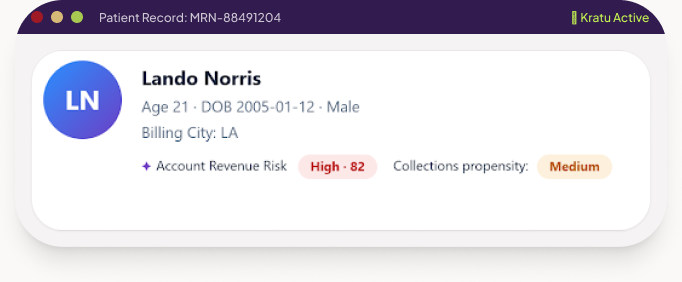
Account Revenue Risk
How much of this account is genuinely at risk, scored 0–100 with collections propensity, before you open a single claim.
- Scrubbing
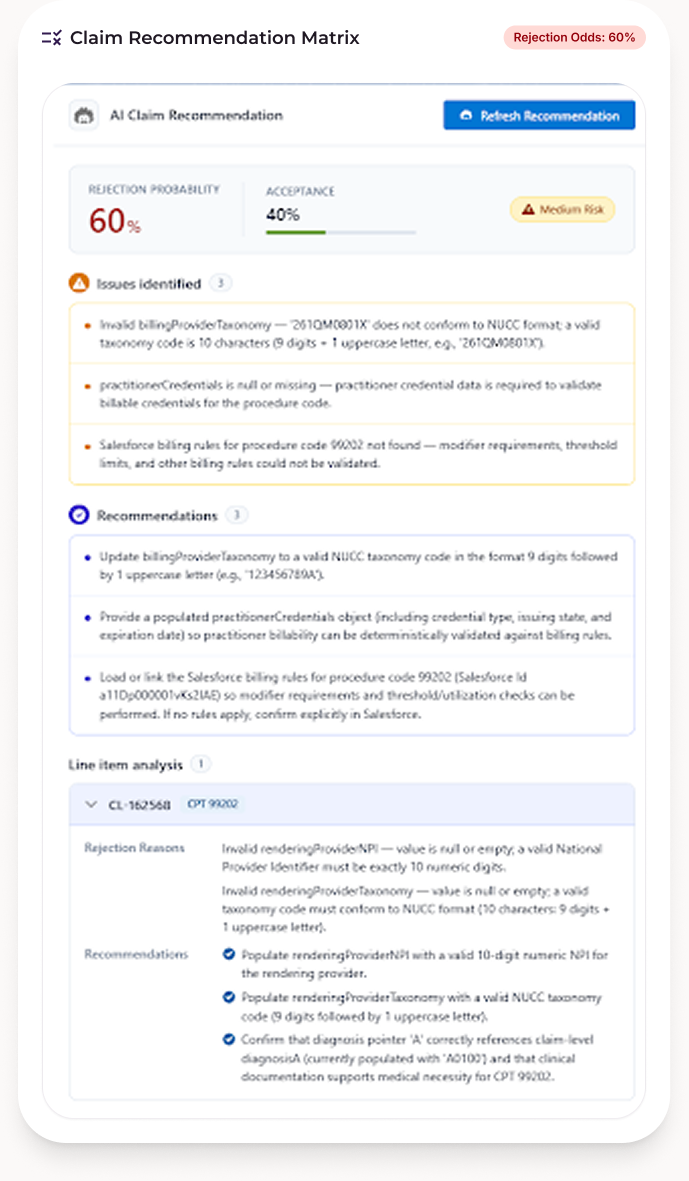
Claim Recommendation
Rejection probability with the exact fields to correct, before the claim is submitted.
- Claim Line
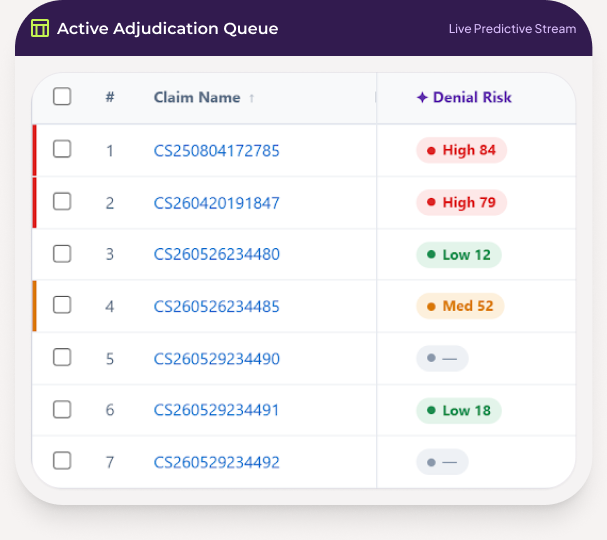
Denial Risk Score
The odds this claim comes back denied, on the claim line, while there is still time to fix it.
- Remittance
Denial Intelligence
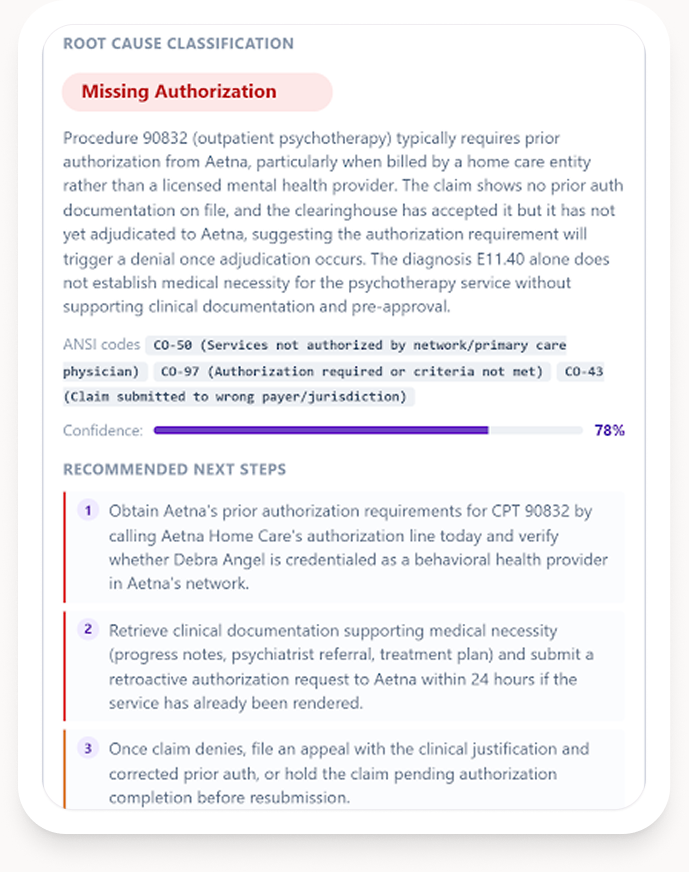
Why the claim was denied, what to do about it today, and whether an appeal is worth filing.
- Cashflow
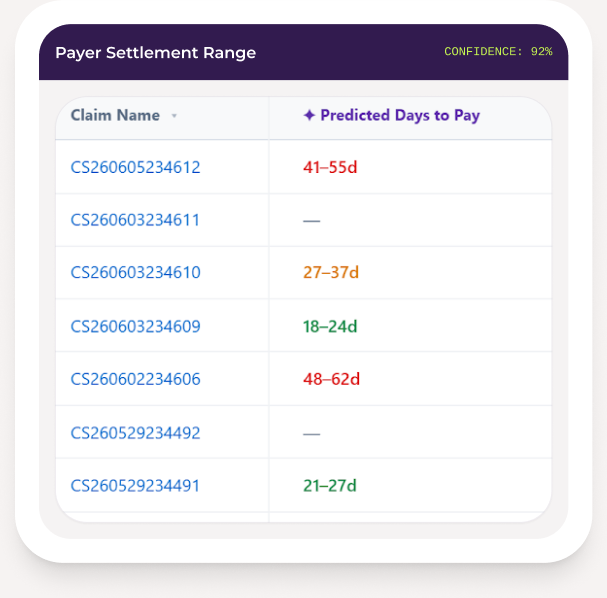
Predicted Days to Pay
When the money actually arrives, as a window you can put in a forecast.
- Appeals
Appeal Letter Drafting
A payer-ready letter drafted for the claim in front of you. Edit, export and track it as sent.
- Closure
Write-Off Assessment
When a claim is not worth chasing, the evidence to close it cleanly and defend the decision.
- Patient Desk
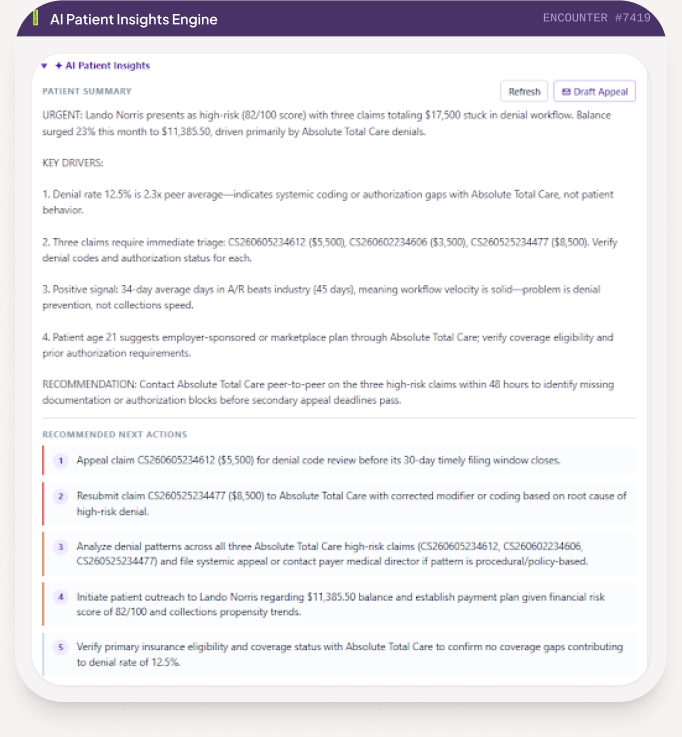
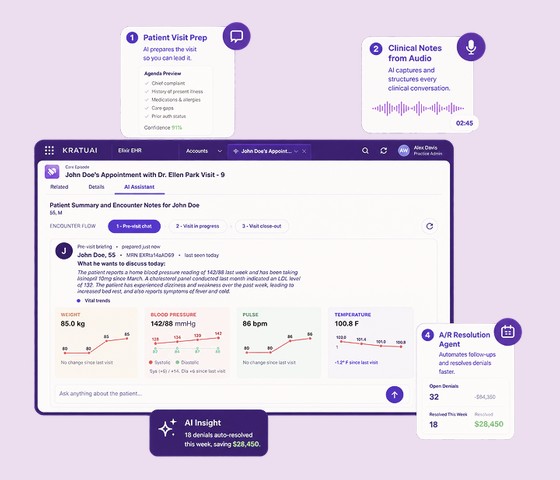
AI Patient Insights
A written account summary with five next actions in priority order, below the patient header.
End-to-End Cycle
Kratu AI prepares the work. Your team decides.
One account, followed from the first look at the balance through submission, follow-up and appeal.
Before Submission
Opening the account and building the claim
Step 01
Account Revenue Risk
Scored 0–100 with probability bands before opening.
Step 02
AI Patient Insights
Instant account summary and top 5 priority actions.
Step 03
Claim Recommendation
Rejection propensity checks and specific field alerts.
Step 04
Your team
Billers verify recommended fixes and submit cleanly.
After Submission
Following up on what is outstanding
Step 01
Denial Risk Score
Claim-line likelihood rating while in adjudication.
Step 02
Predicted Days to Pay
Payer-specific arrival window for defensible cash forecast.
Step 03
Your team
Prioritizes follow-up on high-risk, delayed encounters.
After a Denial
Deciding and appealing
Step 01
Denial Intelligence
ANSI code breakdown, viability check & write-off audit.
Step 02
Your team
Approves appeal pathway or executes justified write-off.
Step 03
Appeal draft
Complete payer-specific clinical argument compiled.
Step 04
Review and send
One-click electronic submission or print export with tracking.
Pre-encounter Metric
Account Revenue Risk
Spot the accounts that will cost you, first
Kratu AI continuously evaluates insurance eligibility, past encounter patterns, deductible depletion, and historical collections propensity. Every account surface presents a clean 0–100 score classified into actionable high, medium, and low revenue risk tiers before any clinician or biller enters the file.
- Low Risk (0–30)
- Moderate (31–65)
- High Risk (66–100)
Synthesized Briefings
AI Patient Insights
The score says attention. This says what to do.
Raw figures alone create cognitive fatigue. Kratu AI synthesizes months of patient charts, electronic remittance advices, and payer rule shifts into a concise written summary with five immediate, sequenced tasks directly beneath the patient header.
Pre-Submission Scrubbing
Claim Recommendation
Catch the errors before the claim leaves the building
Standard clearinghouse scrubbers rely on rigid syntax checks. Kratu AI applies deep clinical coding context, pinpointing missing modifiers, incompatible diagnosis pairings, or missing medical necessity flags before batch submission takes place.
Key Advantage
98.4% first-pass clean claim acceptance rate across all major national commercial and managed Medicaid payers.
Dynamic Prioritization
Denial Risk Score
Work the claims that may be denied, not the oldest ones
Legacy revenue cycle workflows sort follow-up queues by aging (30, 60, 90+ days). Kratu AI inverts this obsolete paradigm. Claims are ranked by dynamic denial propensity so collectors address high-dollar exposures before contractual filing deadlines expire.
Automated Adjudication Analysis
Denial Intelligence
Every denial, already worked out
When a payer issues a denial, Kratu AI immediately translates cryptic ANSI remark codes into clear clinical english, cross-references payer policy updates, evaluates recovery viability, and compiles an automated appeal letter with full supporting chart references.
 Generates fully cited payer-ready appeals in seconds
Cashflow Predictability
Predicted Days to Pay
Forecast cash with a number you can defend
Revenue teams no longer rely on static averages. Kratu AI models seasonality, weekly batch cadences, and specific adjudication turnaround per clearinghouse to calculate defensible expected remittance dates.
Knowledge Base
Insights for Healthcare Teams
 Blog
 Elixir Team
 14 July 2026





Stop paying for denials you could have seen coming
Run A/R Agent on yourown claims
Connect Elixir directly to your current EHR or clearinghouse and evaluate predictive accuracy on historical claims in less than 48 hours.